 DunkRise
How to measure your vertical jump with your phone
Film your jump in slow motion, count the frames your feet are off the ground, and turn that air time into height. No tape measure or wall needed.
Vertical jump (in) = 48 × air time²
Air time = frames in the air ÷ frame rate. For example, 132 frames at 240 fps is 0.55 s, which is a 14.6″ jump.
Why air time tells you how high you jumped
Gravity pulls everything down at the same rate. The longer something stays in the air, the higher it went, and that’s just as true for you as for a ball. So the time your feet are off the ground gives you your jump height.
Why video frames work as a stopwatch
A video is a stack of photos taken at a steady rate. In slow motion an iPhone takes 240 a second, so each frame is about 0.004 s. Count the frames between takeoff and landing and you have your air time.
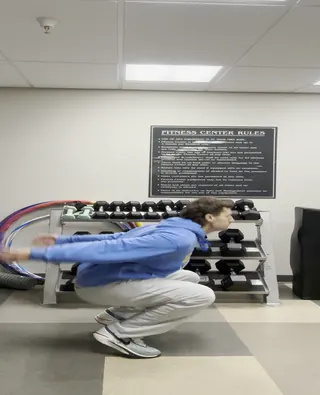
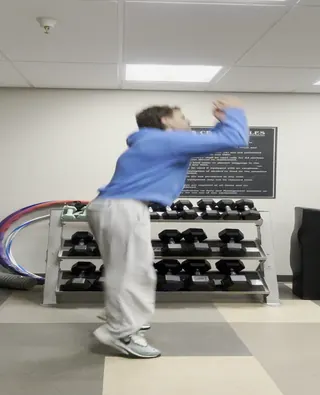 Takeoff
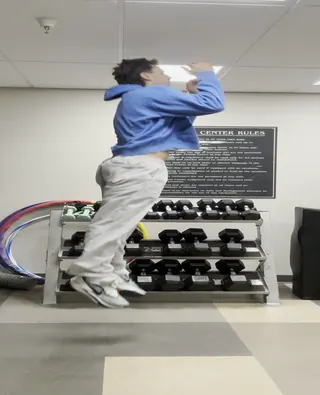
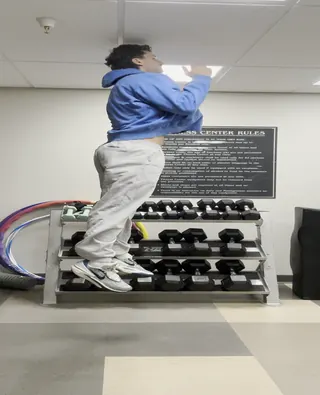
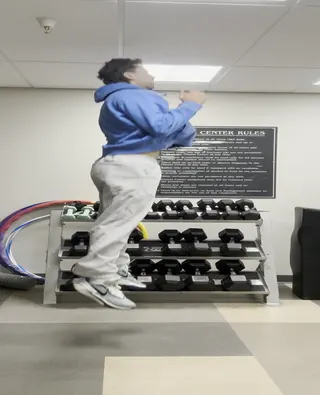
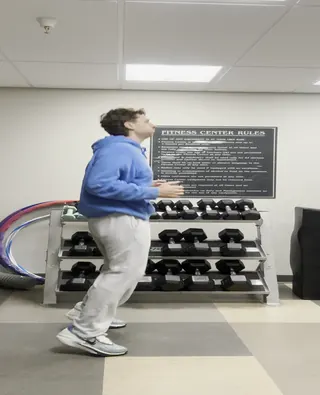
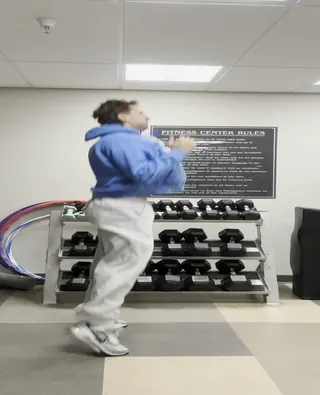 Landing
| Frame rate | Each frame | One frame off |
|---|---|---|
| 30 fps | 0.033 s | ±1.8″ |
| 60 fps | 0.017 s | ±0.9″ |
| 120 fps | 0.008 s | ±0.4″ |
| 240 fps | 0.004 s | ±0.2″ |
“One frame off” is how much a jump of about 15″ changes if you miss takeoff or landing by one frame.
How to measure your vertical jump from a video
Film in slow motion
Use your camera’s slow-motion mode at 120 or 240 fps. Prop the phone on a tripod or against something so it doesn’t move, and keep your whole body and the floor in the shot.
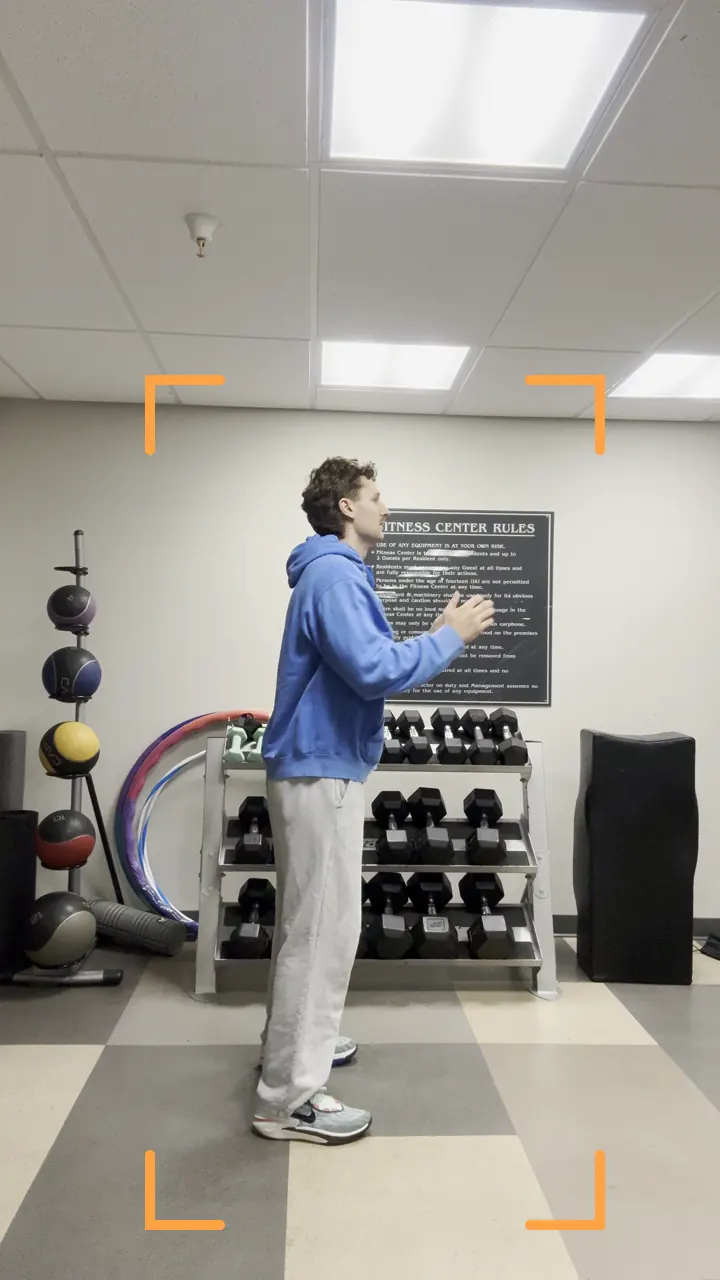
Find takeoff
Step through the video one frame at a time. Takeoff is the last frame with your feet still on the ground.
Find landing
Keep going. Landing is the first frame where your feet touch down again.
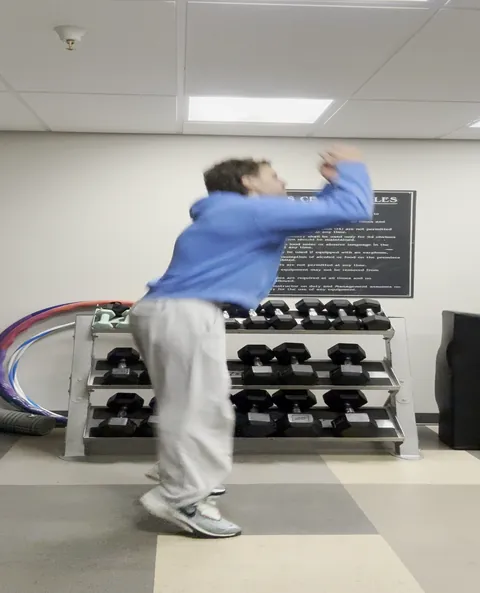
Takeoff 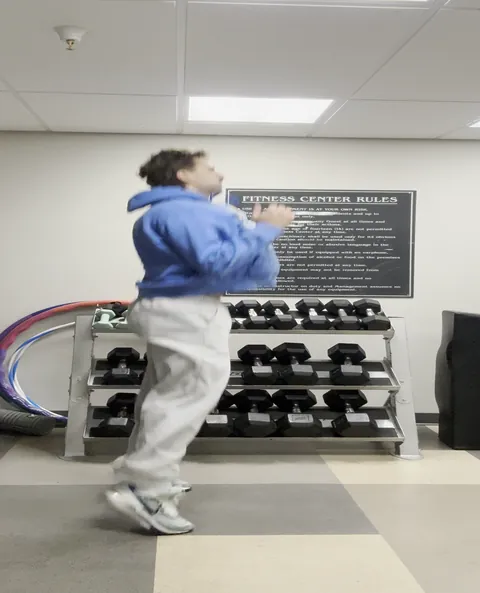
Landing Count the frames
Count the frames from takeoff to landing. If your editor shows frame numbers, subtract the takeoff frame from the landing frame.
Divide by the frame rate
132 frames ÷ 240 fps = 0.55 s in the air.
Turn air time into jump height
Height (in) = 48 × t²
Height (cm) = 123 × t²
t is your air time in seconds.
Multiply the air time by itself, then by 48. For 0.55 s, 0.55 × 0.55 ≈ 0.30, and 0.30 × 48 = 14.6″.
The 48 comes from gravity. You rise for half your air time and fall for the other half, so your height is g × t² ÷ 8. With g = 9.81 m/s², that’s 1.23 m/s² or 48 in/s².
Air time to vertical jump chart
| Air time | Vertical jump | Frames in the air | ||
|---|---|---|---|---|
| Inches | Metric | 60 fps | 240 fps | |
| 0.30 s | 4.3″ | 11 cm | 18 | 72 |
| 0.35 s | 5.9″ | 15 cm | 21 | 84 |
| 0.40 s | 7.7″ | 20 cm | 24 | 96 |
| 0.45 s | 9.8″ | 25 cm | 27 | 108 |
| 0.50 s | 12.1″ | 31 cm | 30 | 120 |
| 0.55 s | 14.6″ | 37 cm | 33 | 132 |
| 0.60 s | 17.4″ | 44 cm | 36 | 144 |
| 0.65 s | 20.4″ | 52 cm | 39 | 156 |
| 0.70 s | 23.6″ | 60 cm | 42 | 168 |
| 0.75 s | 27.1″ | 69 cm | 45 | 180 |
| 0.80 s | 30.9″ | 78 cm | 48 | 192 |
| 0.85 s | 34.9″ | 89 cm | 51 | 204 |
| 0.90 s | 39.1″ | 99 cm | 54 | 216 |
Height = g × t² ÷ 8. To see what you need to dunk, check how high you need to jump to dunk.
Mistakes that inflate your number
Landing with bent knees
If you tuck your knees or land in a squat, your feet reach the floor later. You stay in the air longer and the number comes out too high. Land the way you took off, with straight legs.
Filming at normal speed
At 30 fps, one frame off can change your result by almost 2 inches. At 240 fps it’s about a fifth of an inch.
Let DunkRise measure it
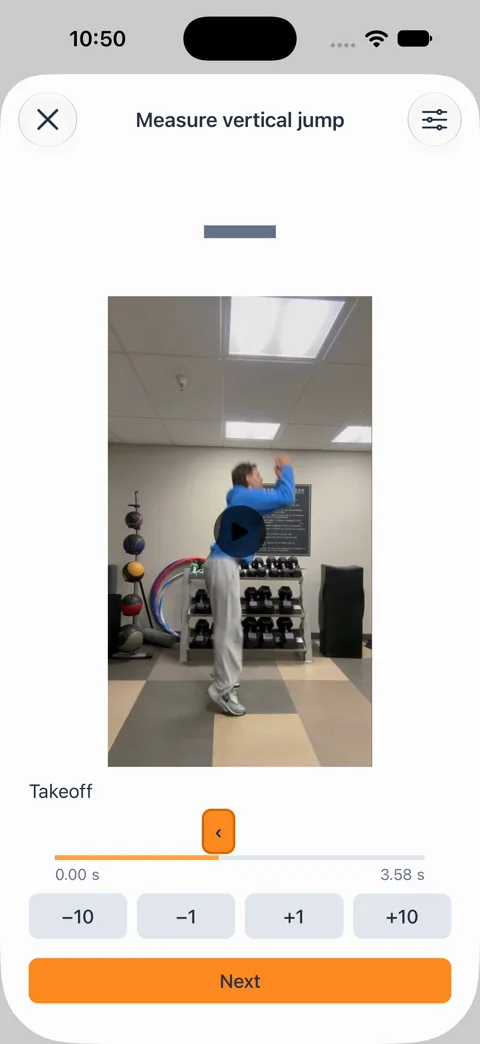
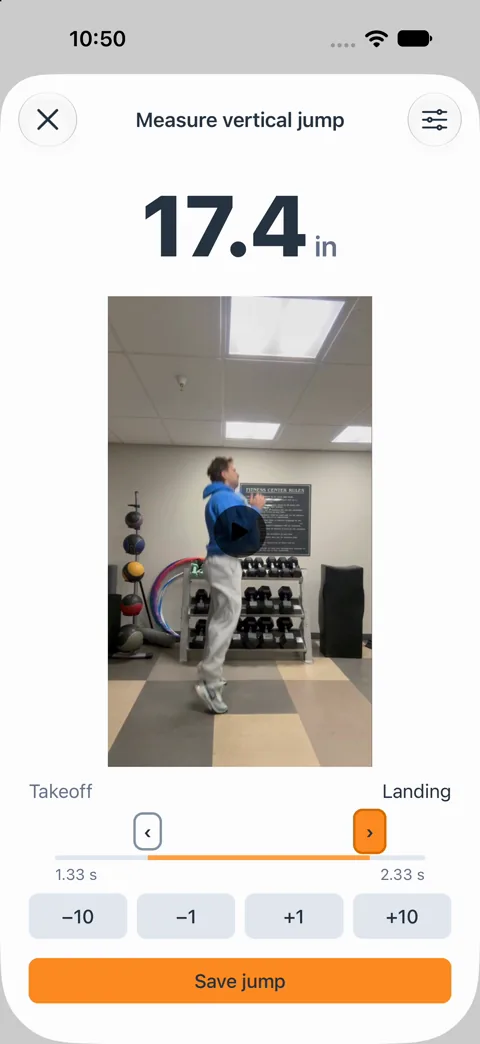
DunkRise finds takeoff and landing in your video and gives you your height. You can check any frame with −1 and +1.


FAQ
Is the flight time method accurate?
Yes, if you take off and land in the same position with straight legs. It’s how most jump mats and jump apps measure. Most error comes from the frame rate and from bending your knees before you land.
What frame rate should I use?
240 fps slow motion is best and 120 fps works well. At a normal 30 fps, one frame is worth almost 2 inches.
How do I convert to centimeters?
Use height (cm) = 123 × air time², or multiply inches by 2.54.
How is this different from a jump and reach test?
Jump and reach measures how high your hand gets: your jump touch minus your standing reach. Flight time measures how far your body rises. Both give similar numbers for a clean jump.
Related: Standing reach · How high you need to jump to dunk